How Fast Does a Spacecraft Need to Go to Come Home?
The minimum reentry velocity ideal for a spacecraft returning to Earth depends on a number of factors, including the spacecraft's trajectory, shape, and mass. However, as a general rule of thumb, a spacecraft must be traveling at least 7.8 km/s (28,080 ft/s) in order to enter Earth's atmosphere and begin its descent. This is the velocity required to overcome Earth's gravity and stay in orbit.
Advertisement
Advertisement
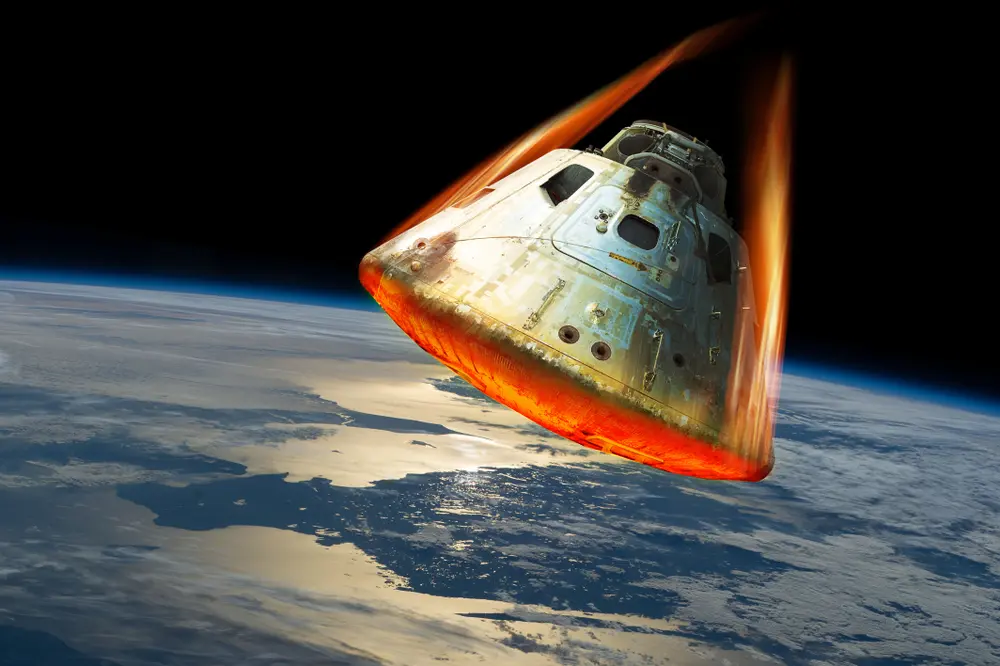
Any spacecraft traveling faster than 7.8 km/s will experience a significant amount of friction and heat as it passes through the atmosphere. This is because the air molecules at high altitudes are so thin that they cannot effectively deflect the spacecraft. As a result, the spacecraft's kinetic energy is converted into heat, which can reach temperatures of several thousand degrees Celsius.
To protect the spacecraft from this extreme heat, it is equipped with a heat shield. The heat shield is typically made of a material that ablates, or vaporizes, at high temperatures. This process absorbs some of the heat and prevents it from reaching the spacecraft's interior.
The minimum reentry velocity can be reduced by using a lifting body design for the spacecraft. A lifting body is a spacecraft that has a shape that allows it to generate aerodynamic lift as it moves through the atmosphere. This lift allows the spacecraft to slow down without having to rely on friction alone.
Advertisement
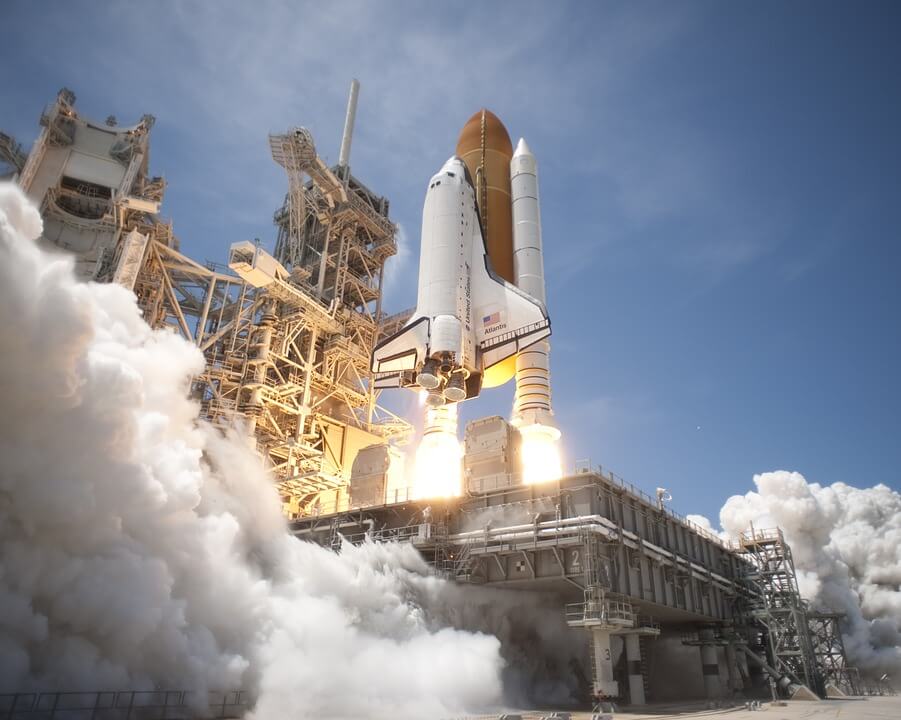
The Space Shuttle is a good example of a lifting body spacecraft. The Shuttle's wings and other aerodynamic surfaces allowed it to slow down to subsonic speeds before deploying its parachutes for landing.
Another way to reduce the minimum reentry velocity is to use a retrograde rocket burn. A retrograde rocket burn is a maneuver in which the spacecraft's engines are fired in the opposite direction of its travel. This slows the spacecraft down and makes it easier to control during reentry.
The minimum reentry velocity for a spacecraft returning to Earth is a complex topic that depends on a number of factors. However, as a general rule of thumb, a spacecraft must be traveling at least 7.8 km/s in order to enter Earth's atmosphere and begin its descent.
Advertisement
Here are some additional details on the minimum reentry velocity ideal for a spacecraft returning to Earth:
- Trajectory: The trajectory of the spacecraft has a significant impact on its reentry velocity. A spacecraft that enters the atmosphere at a steep angle will experience more friction and heat than a spacecraft that enters at a shallower angle.
- Shape: The shape of the spacecraft also affects its reentry velocity. A blunt-nosed spacecraft will experience more friction and heat than a spacecraft with a pointed nose.
- Mass: The mass of the spacecraft also plays a role in its reentry velocity. A heavier spacecraft will experience more friction and heat than a lighter spacecraft.
In addition to these factors, the minimum reentry velocity can also be affected by the spacecraft's heat shield design and the atmospheric conditions at the time of reentry.
Engineers carefully design spacecraft and their reentry trajectories to ensure that they can safely return to Earth. The minimum reentry velocity is a critical factor in this design process.