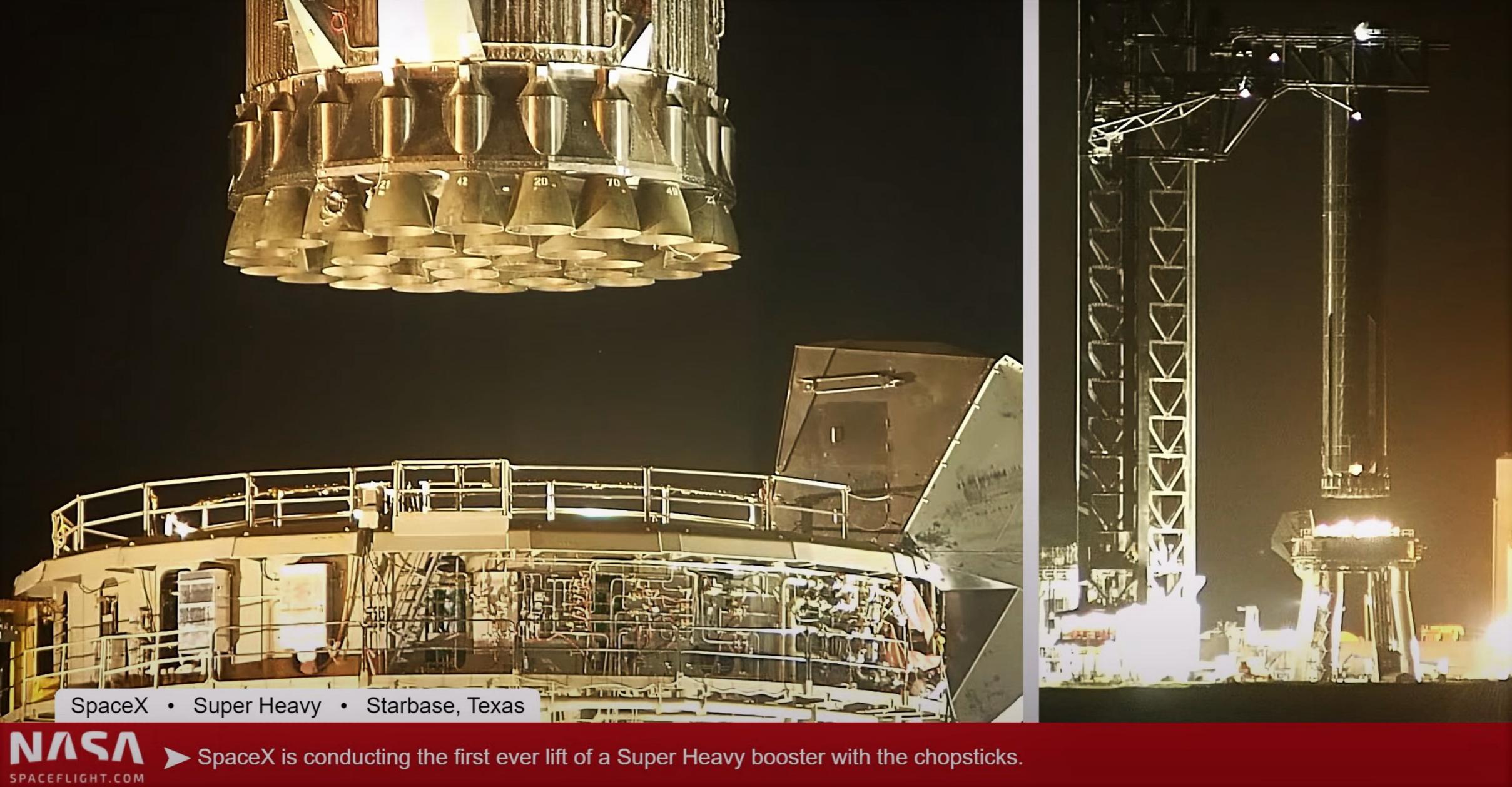
SpaceX uses giant robot arms to install the Super Heavy booster on the launch platform.
Friday, June 24, 2022 | Chimniii Desk
SpaceX has transported the most powerful rocket booster ever assembled to its Starbase orbital launch site (OLS) and installed it using massive robotic arms.
It's not the first time this booster, known as Booster 7 or B7, has made a trip like this for Starship's Super Heavy first stage in general. Booster 7 arrived at the pad on March 31st and passed two major cryogenic proof tests before being severely damaged during a subsequent structural stress test. After a few weeks of repairs at the factory, B7 returned to the pad for a second time and passed a third cryoproof test before returning to the factory on May 14th, where it remained until June 23rd.
After nearly six weeks of additional work, Booster 7 arrived at the launch pad for the third and possibly final time.
Advertisement
Advertisement
Even Booster 7's initial release was not unprecedented. Booster 4 - an earlier prototype with fewer engines, less thrust, and several other differences - arrived at the launch site in September 2021, with 29 Raptor V1 engines installed. Over the next six months, SpaceX gradually completed the booster, conducted a few proof tests, and eventually performed three "full-stack" tests with Starship S20. For a time, SpaceX hoped to fly B4 and S20 on Starship's first orbital launch attempt, but that plan never materialised.
Despite having all 29 of its engines fully installed and encased inside a shell-like heat shield, Booster 4 was particularly underwhelming, never even attempting a single static fire. Fortunately, Booster 7 appears to have a much better chance of at least attempting one or more static fires, even if there's no guarantee that it'll survive that test campaign in good enough condition to support Starship's orbital launch debut.
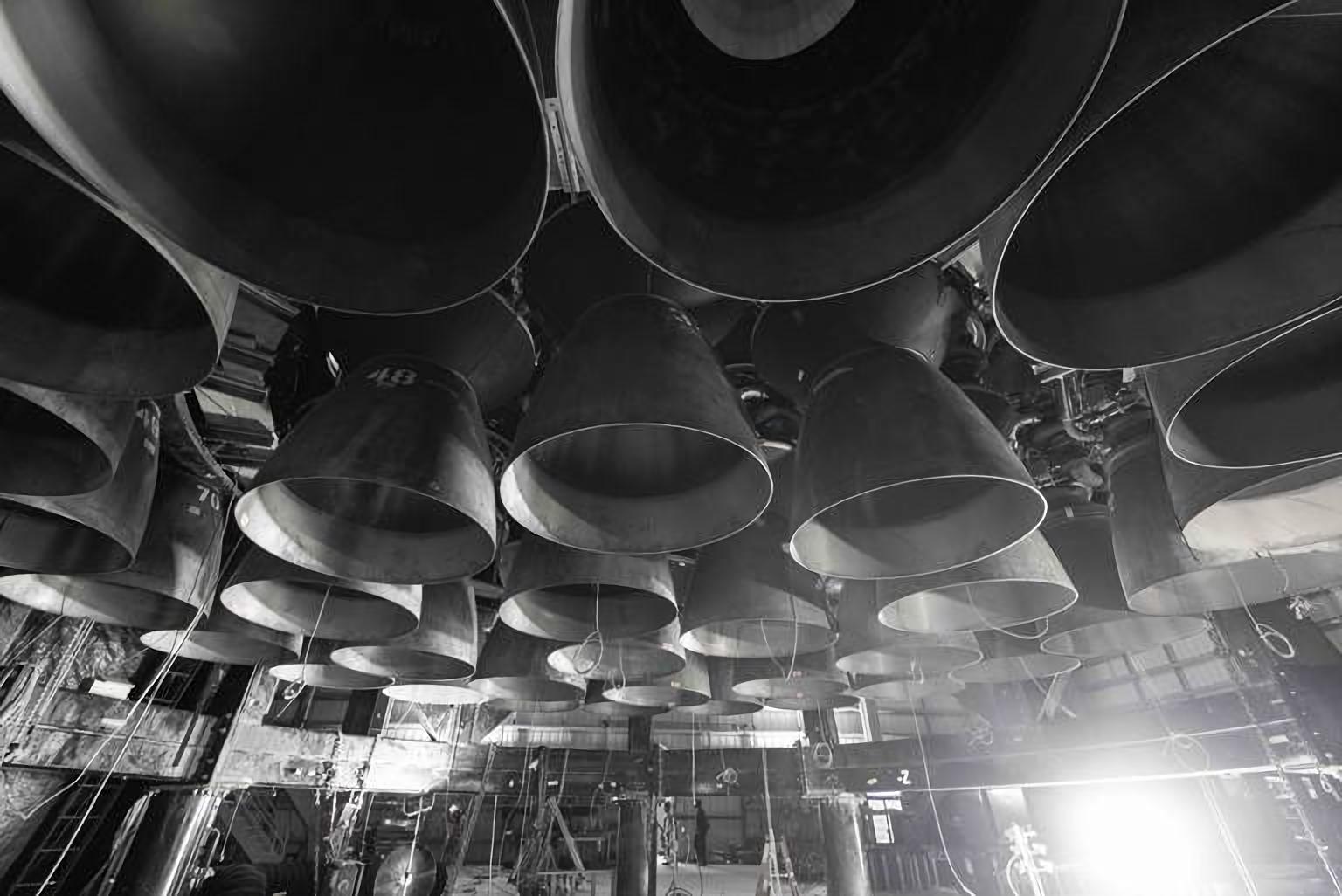
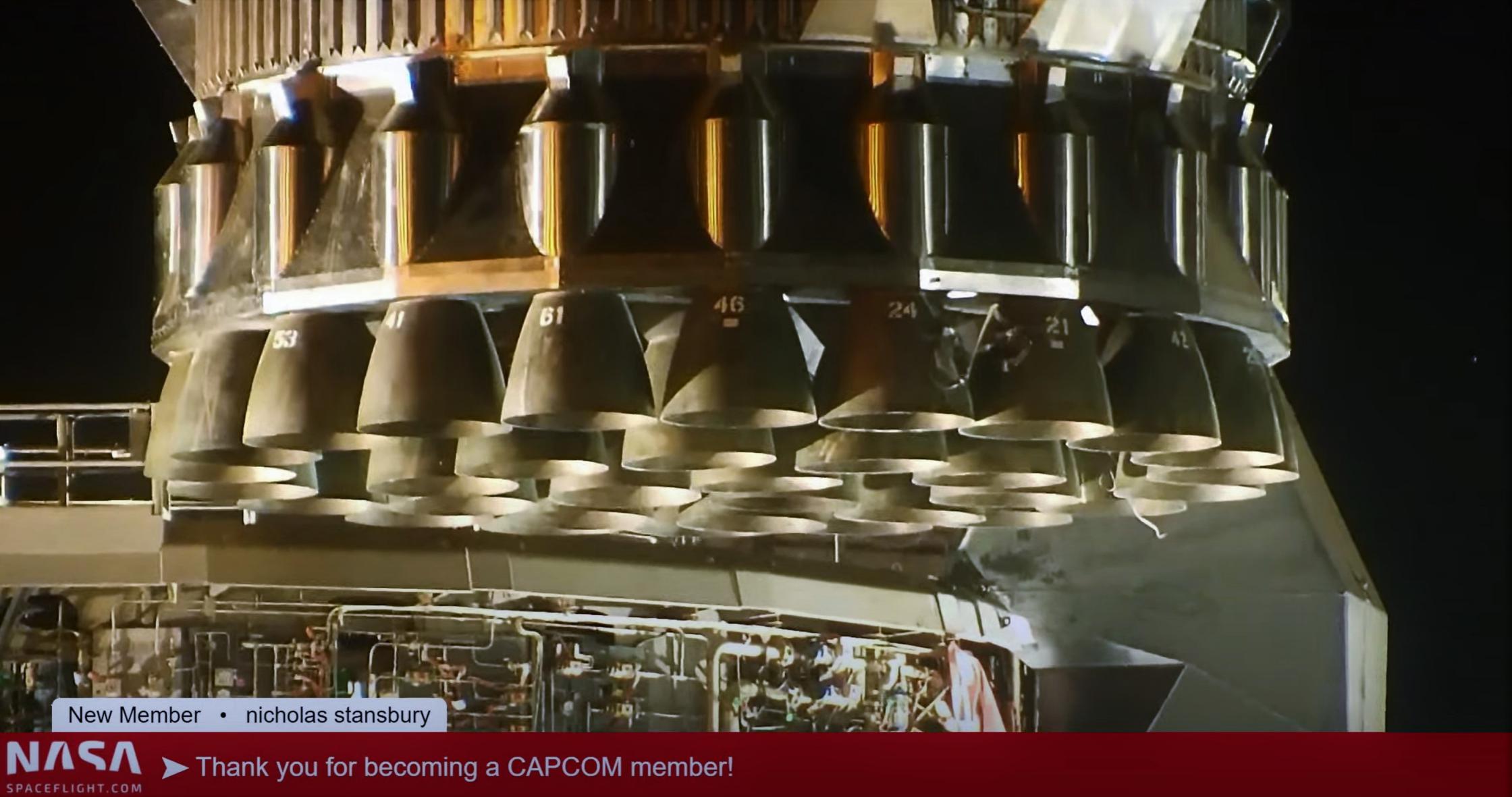
SpaceX used the six weeks Booster 7 spent in a factory assembly bay to complete the installation of aerocovers, chines or strakes, car-sized grid fins, Starlink internet dishes, and - most importantly - 33 upgraded Raptor V2 engines. Booster 7 should be able to produce up to 7600 metric tonnes (16.8M lbf) of thrust when combined, which is 41% more thrust than Booster 4 was theoretically capable of. Crucially, SpaceX completed the installation of Booster 7's Raptor heat shield during the same time frame, completing in six weeks work that took Booster 4 nearly a year.
SpaceX has transported the most powerful rocket booster ever assembled to its Starbase orbital launch site (OLS) and used giant robotic arms to install it.
It’s not the first such trip for Starship’s Super Heavy first stage in general, nor for this specific booster, which is known as Booster 7 or B7. Booster 7 first headed to the pad on March 31st and successfully completed two major cryogenic proof tests, but was then severely damaged during a subsequent structural stress test. After a few weeks of repairs back at the factory, B7 rolled to the pad a second time and completed a third cryoproof test and returned to the factory on May 14th, where it stayed until June 23rd.
After almost six weeks of additional work, Booster 7 rolled to the launch pad for the third time – possibly its last trip.
Advertisement
Advertisement
Even Booster 7’s first rollout wasn’t unprecedented, however. In September 2021, Booster 4 – an earlier prototype with fewer engines, less thrust, and several other differences – arrived at the launch site with 29 Raptor V1 engines installed. Over the next six months, SpaceX slowly finished the booster, conducted a handful of proof tests, and eventually performed three ‘full-stack’ tests with Starship S20. For awhile, SpaceX hoped to eventually fly B4 and S20 on Starship’s first orbital launch attempt, but that plan never came close to fruition.
Booster 4 was particularly underwhelming and never even attempted a single static fire despite having all 29 of its engines fully installed and encased inside a shell-like heat shield. Thankfully, Booster 7 appears to have a much better chance of at least attempting one or several static fires, even if there’s no guarantee that it will make it through that test campaign in good enough condition to support Starship’s orbital launch debut.
Advertisement
Advertisement
SpaceX used the six weeks Booster 7 spent back in a factory assembly bay to finish installing aerocovers, surfaces known as chines or strakes, car-sized grid fins, Starlink internet dishes, and – most importantly – 33 upgraded Raptor V2 engines. Combined, Booster 7 should be able to produce up to 7600 metric tons (~16.8M lbf) of thrust – 41% more thrust than Booster 4 was theoretically capable of. Crucially, SpaceX also finished installing Booster 7’s Raptor heat shield in the same period, completing in six weeks work that took Booster 4 more like half a year.
That is likely because testing Booster 4, for whatever reason, just wasn’t a priority for SpaceX. Preparing Booster 7 for static fire testing, however, is clearly a front-and-center priority in 2022. With its heat shield and all 33 Raptors installed, Booster 7 will be ready to kick off static fire testing almost as soon as it’s installed on Starbase’s orbital launch mount.
Advertisement
Advertisement Booster 7 will begin by igniting just one or a few Raptor engines, according to CEO Elon Musk. SpaceX has never tested more than six Raptor V1 engines at the same time, and has never tested more than three engines on a Super Heavy booster. That plan, however, could have easily changed. In any case, Super Heavy B7 will be breaking new ground. Booster 7 will also need to complete one or more wet dress rehearsals (WDRs), which are tests that exactly simulate a launch but stop just before the moment of ignition.If SpaceX attempts a full wet dress rehearsal, in which the booster is filled with more than 3000 tonnes (6.6 million lb) of liquid oxygen (LOx) and liquid methane (LCH4), it will be a first for Super Heavy and a significant test of the orbital launch site. Booster 7 will also need to test its autogenous pressurisation, which uses hot oxygen and methane gas instead of helium to pressurise the rocket's propellant tanks.
Advertisement
Several hours after Super Heavy B7 arrived at the orbital launch site (for the third time), SpaceX used two massive arms attached to the pad's launch tower to lift the 70-meter (230-foot) tall rocket onto the launch mount. While Musk claims that the arms' ultimate goal is to catch Starship and Super Heavy in mid-air, their current purpose is to replace the tall and unwieldy crane that would otherwise be required to lift either stage. The arms are a complex solution, but they allow SpaceX to remotely lift, install, and remove Starship stages while shielding those processes from wind conditions, which cranes are sensitive to.
The booster will be connected to ground systems once fully secured by the mount's 20 hold-down clamps, and SpaceX can prepare B7 to begin the next stage of preflight testing as early as Monday, June 27th.